Talk for five minutes. Approve your resume.
The Career Agent asks the questions. Your resume appears line by line as you answer.
Works on your computer and phone.
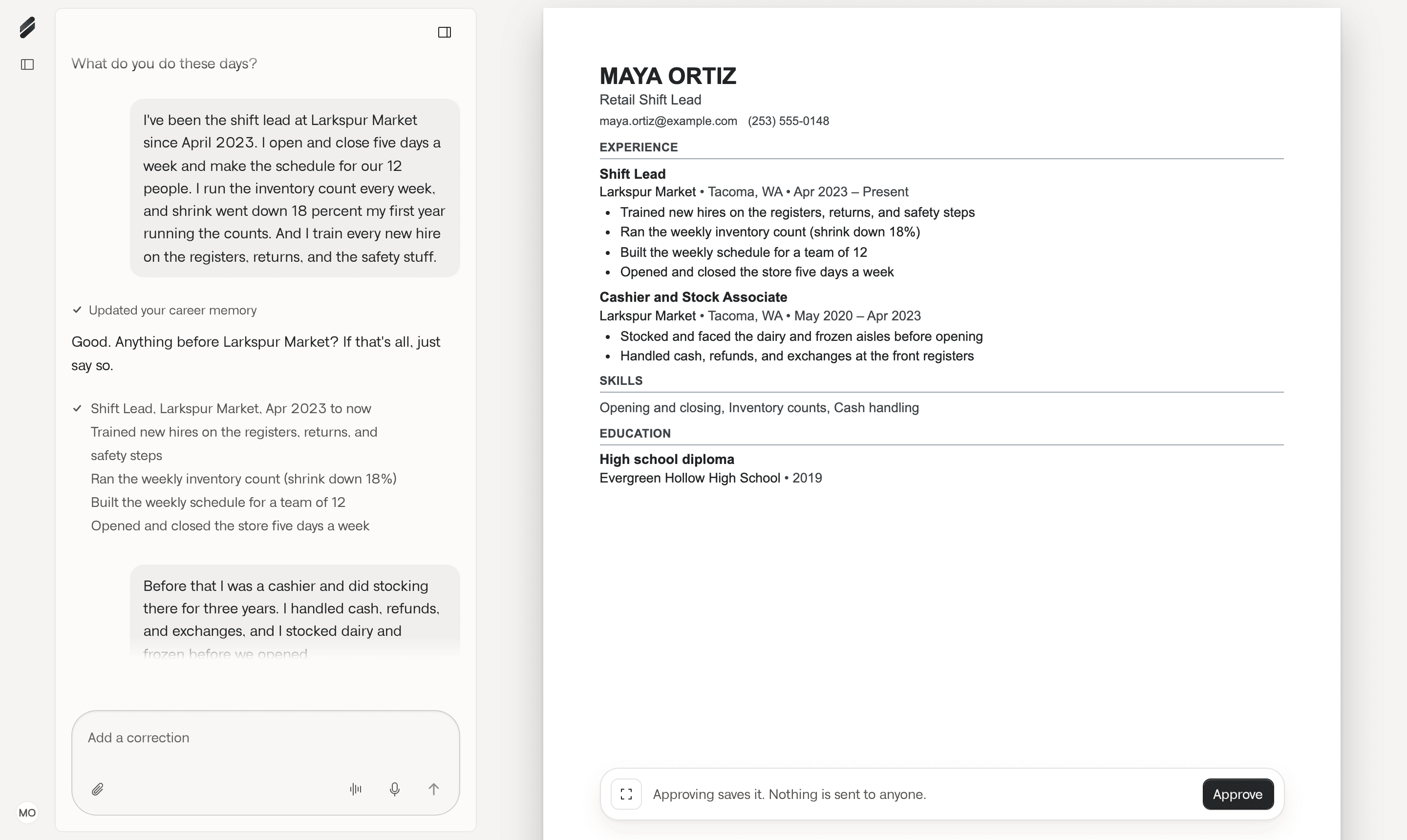
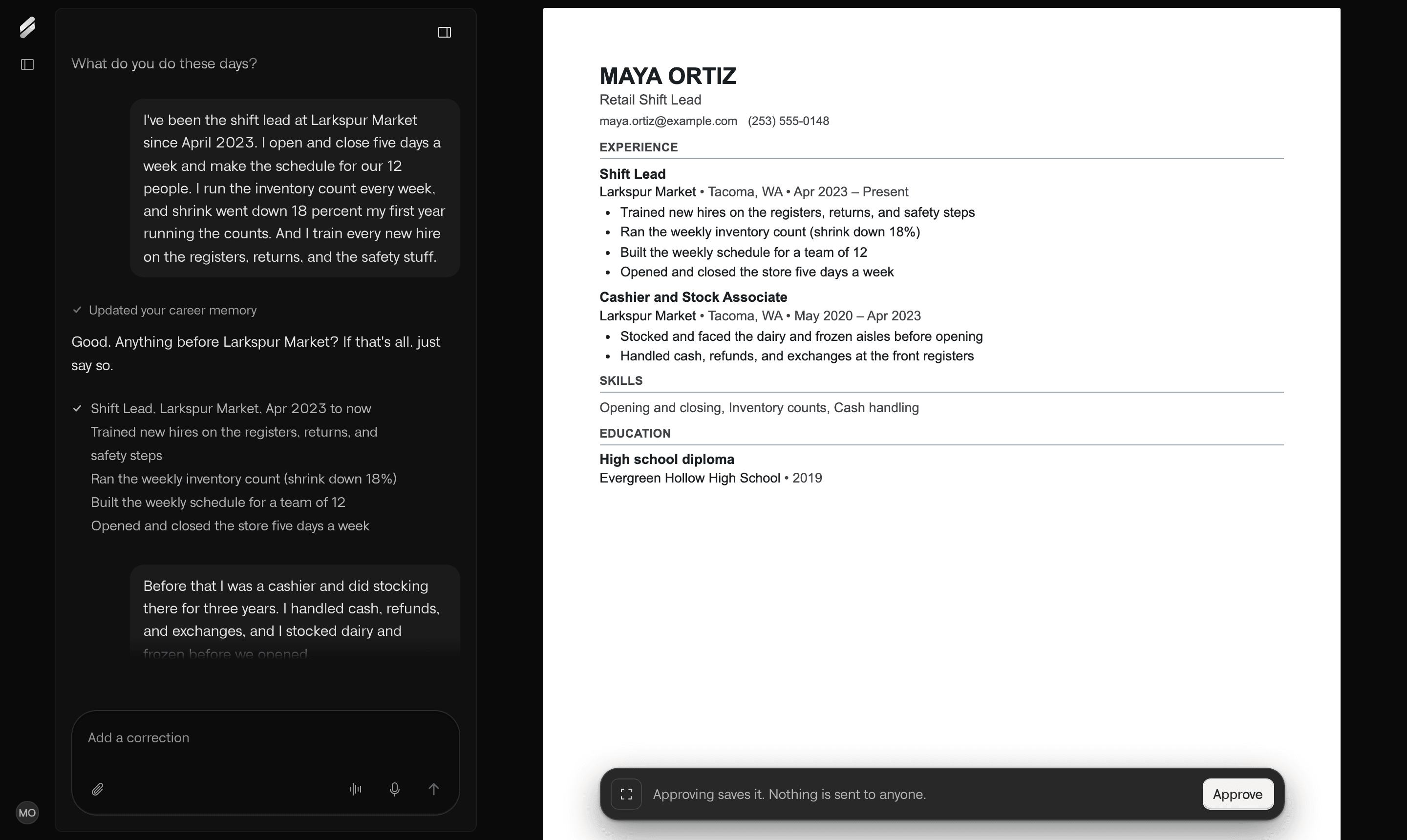
Example account. Maya and the job details are fictional.
Paste a job link from these sites to save it.
Most resumes start from a blank page. Say it once, and MemoryCV brings it to every job you go after.
Say it out loud instead of typing
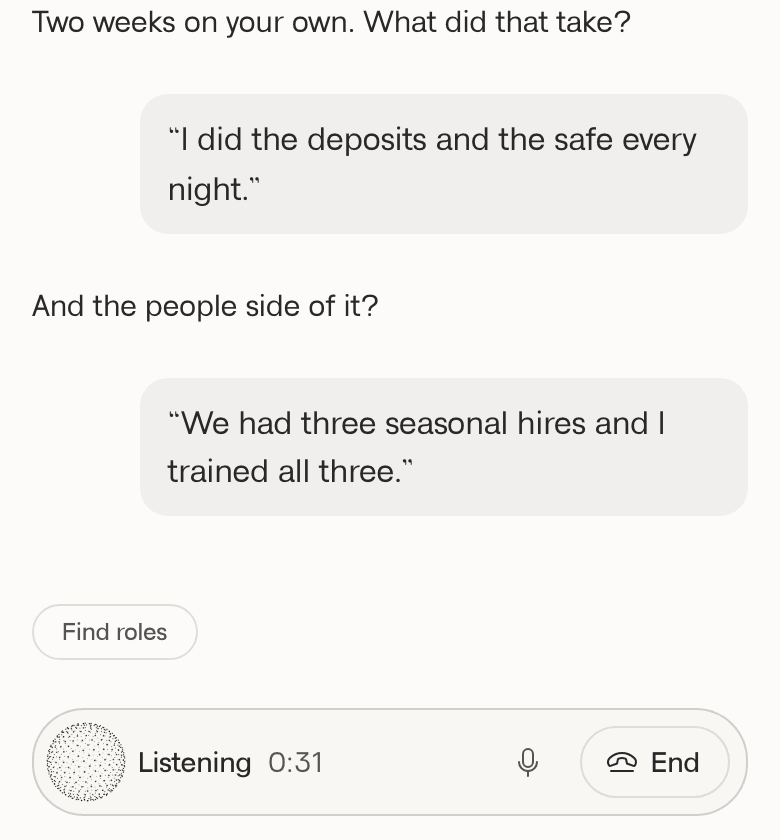
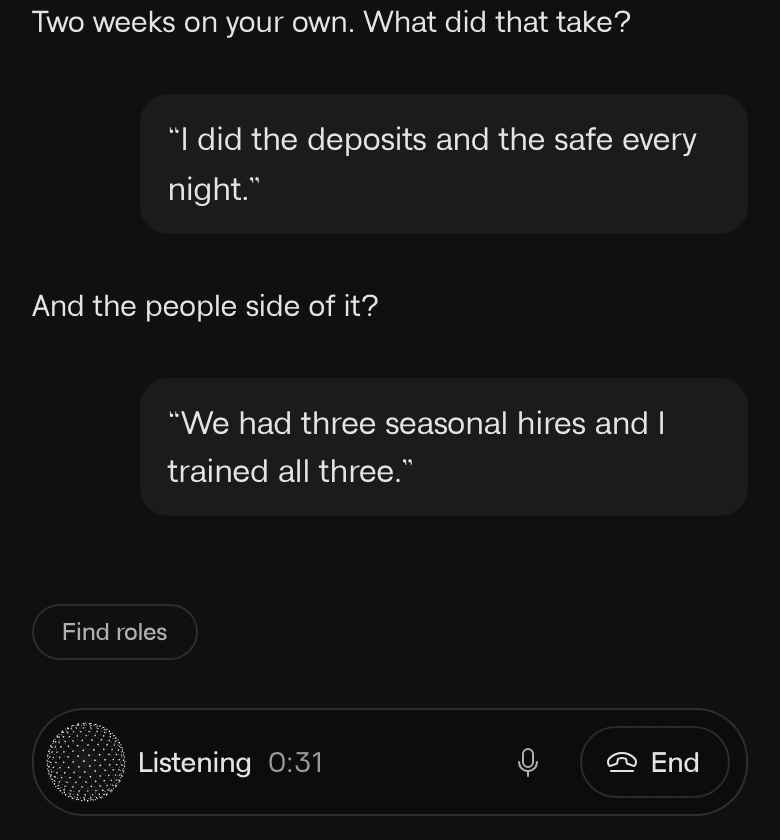
Press Talk and tell it about your work. When the call ends, the chat keeps what you said.
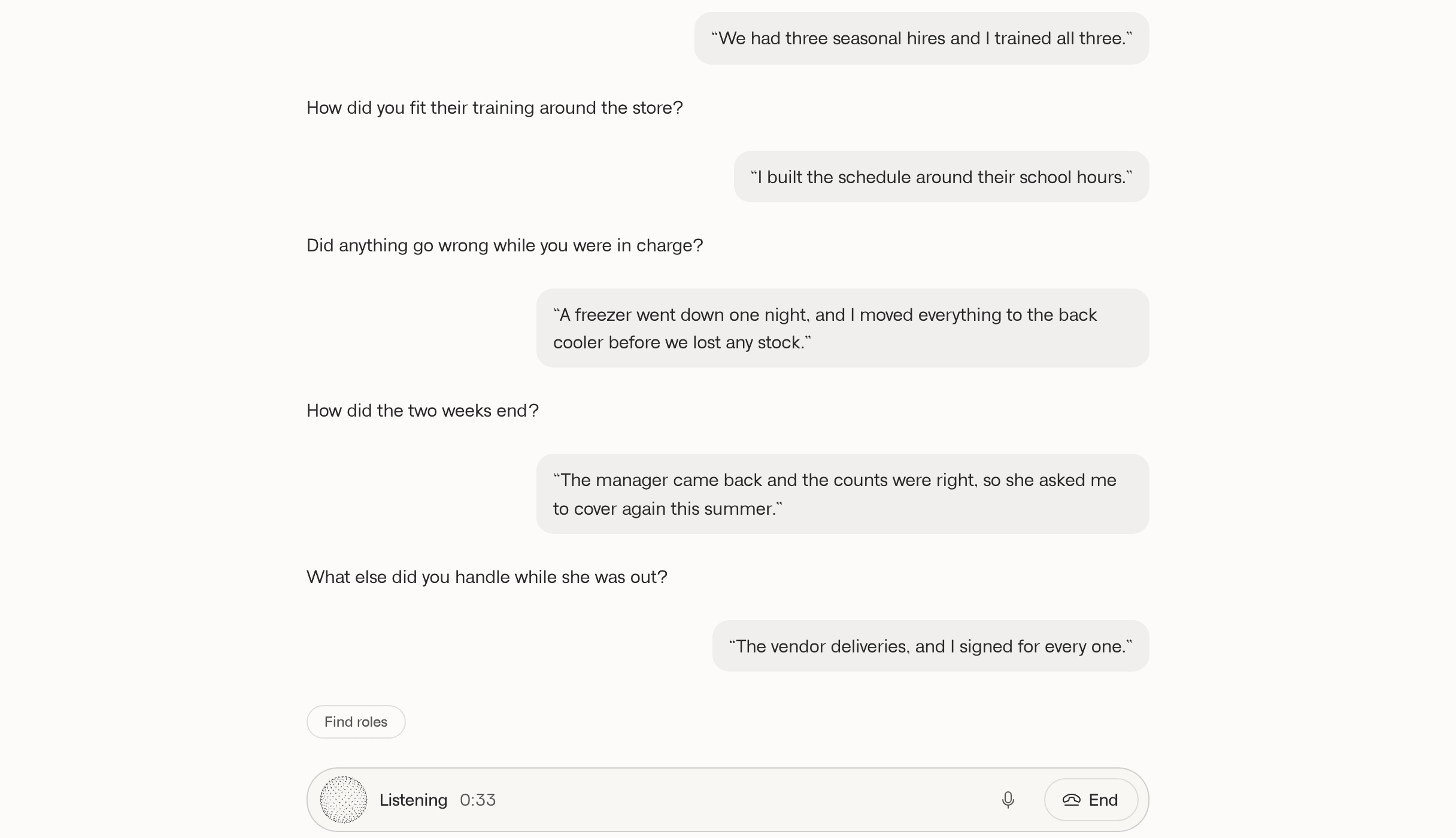
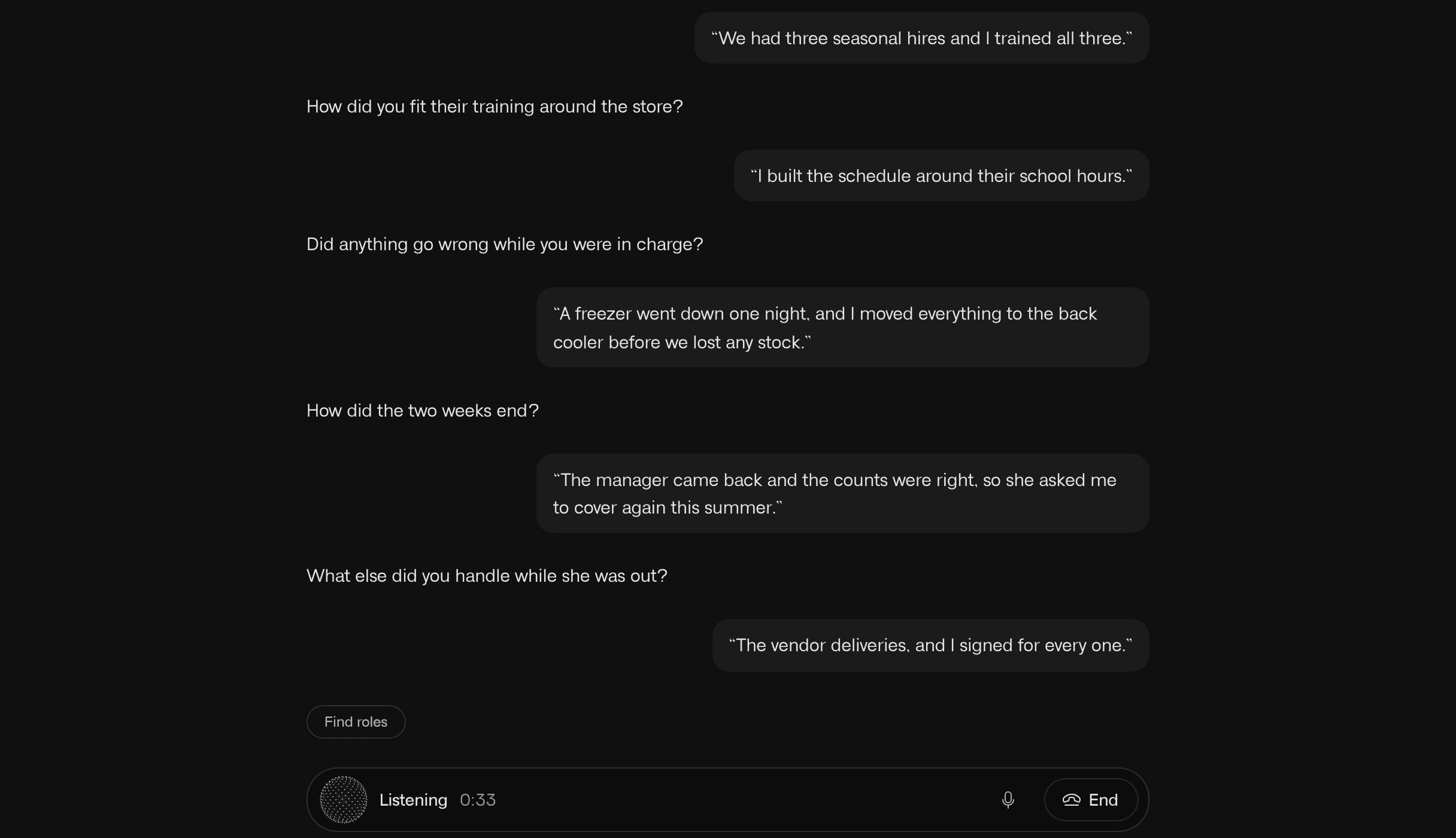
One place for your work history
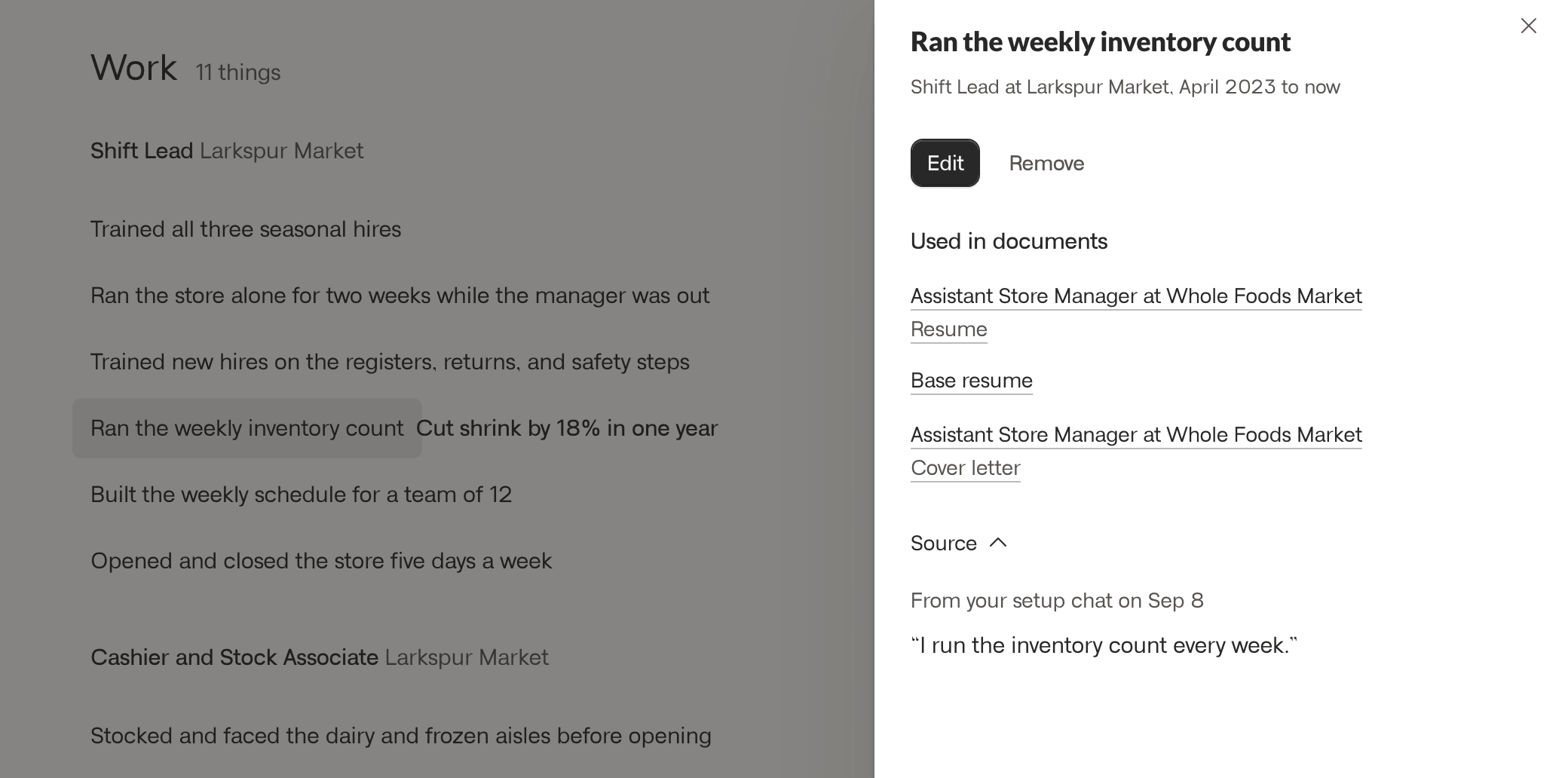
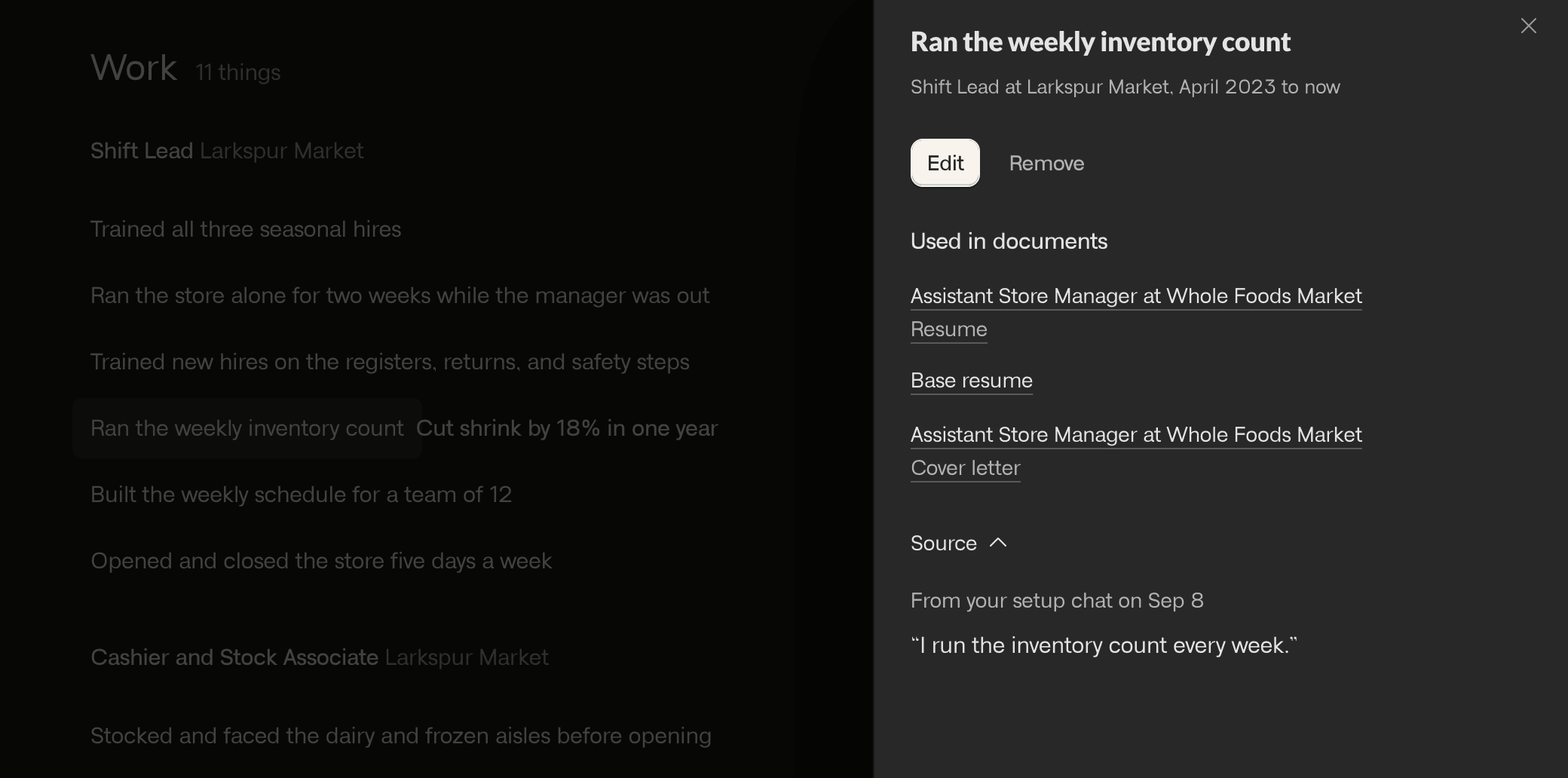
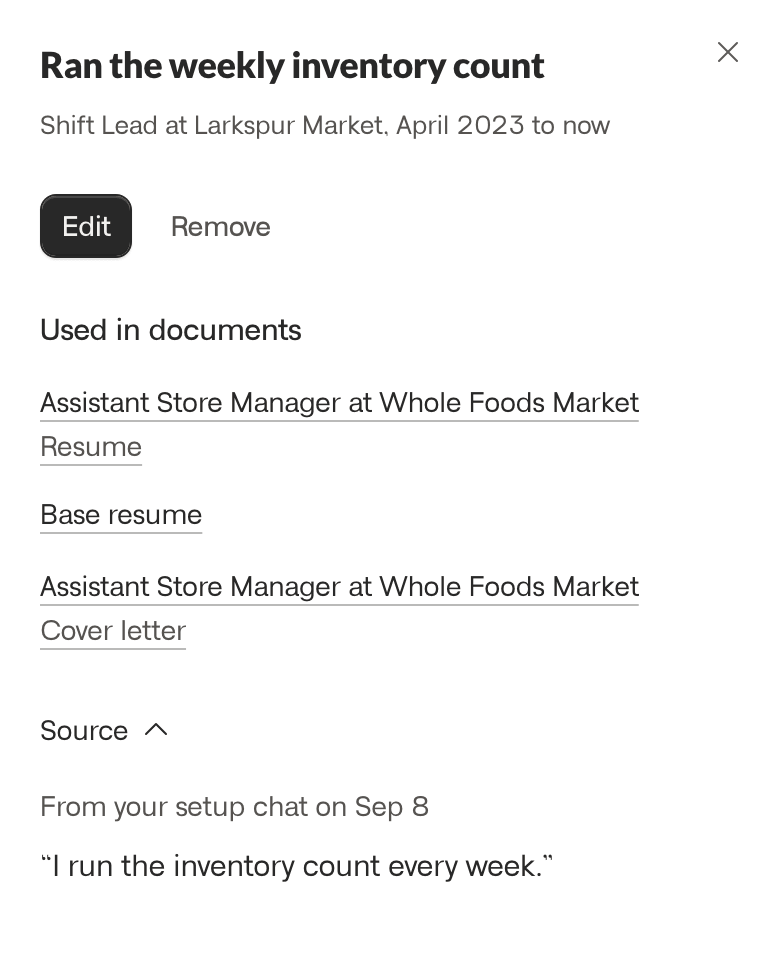
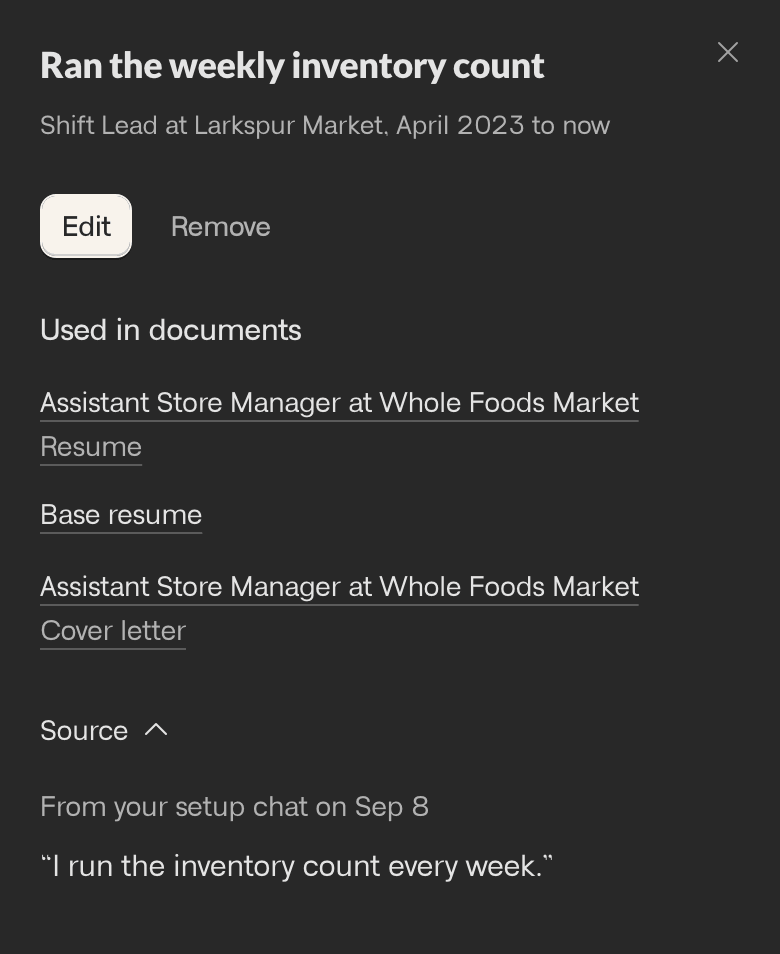
Each job, skill, and result you mention is saved as you said it, from any chat or call. Open your career memory to fix a line or add what it missed.
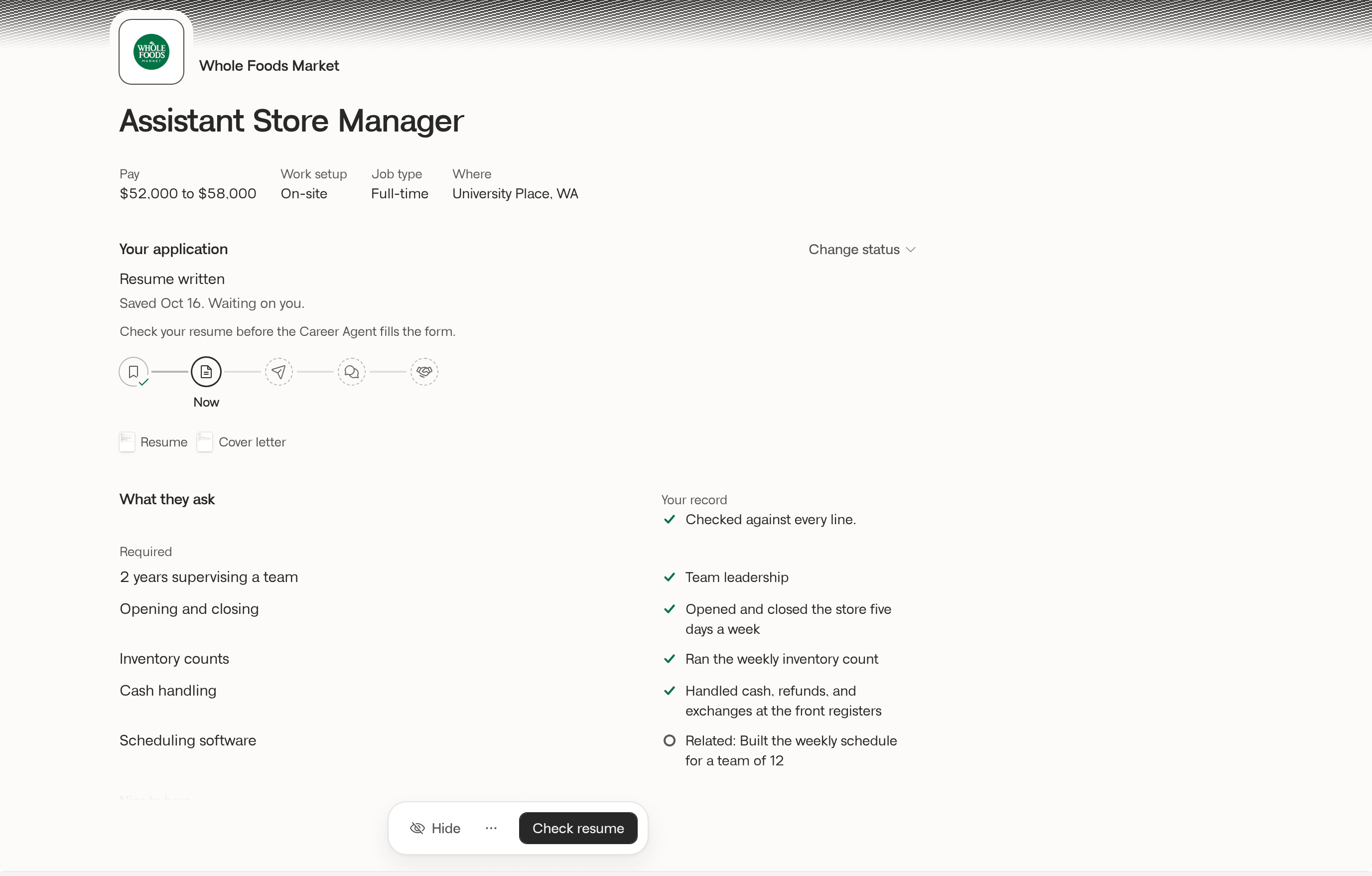
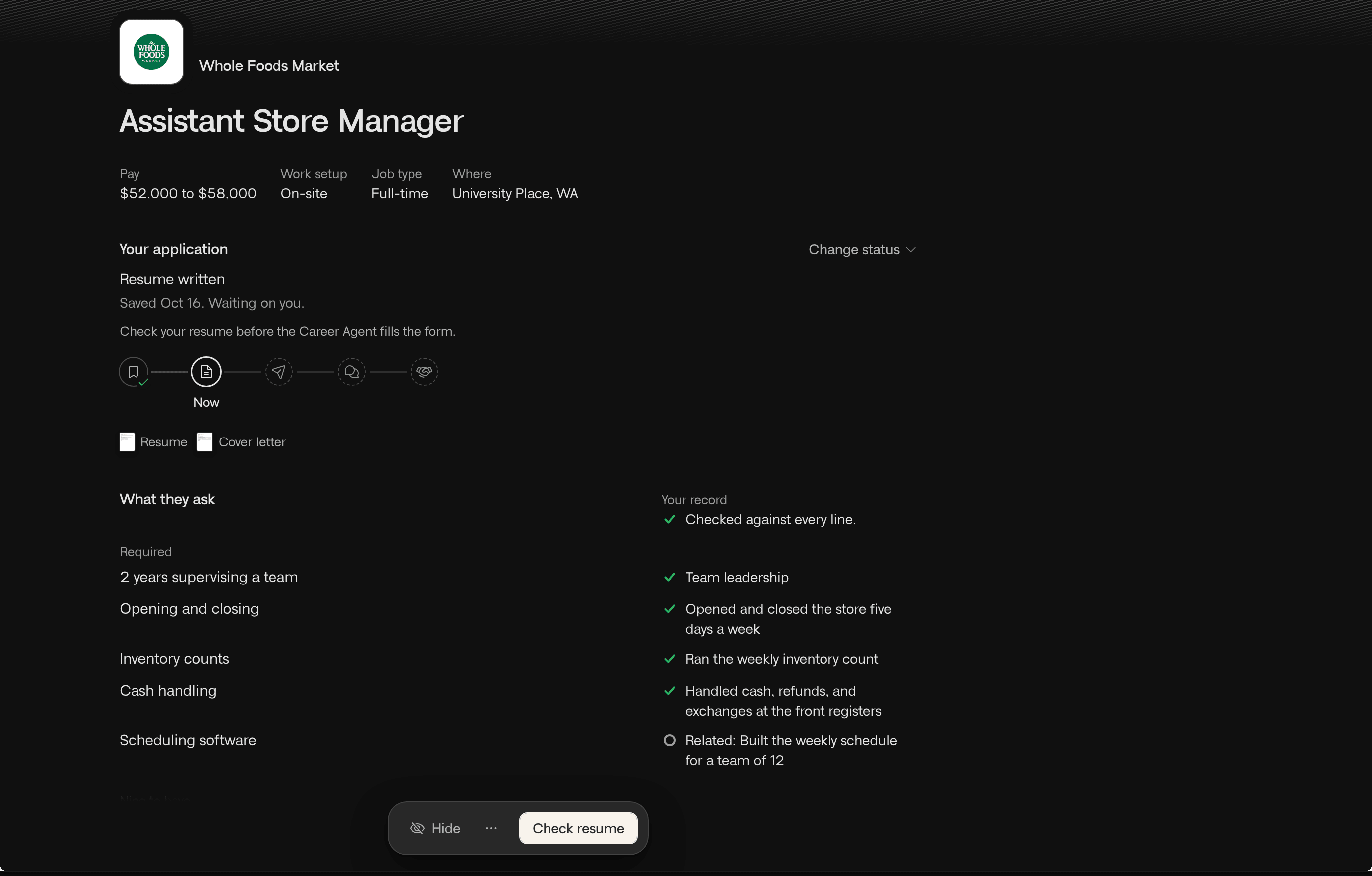
See how you line up before you apply
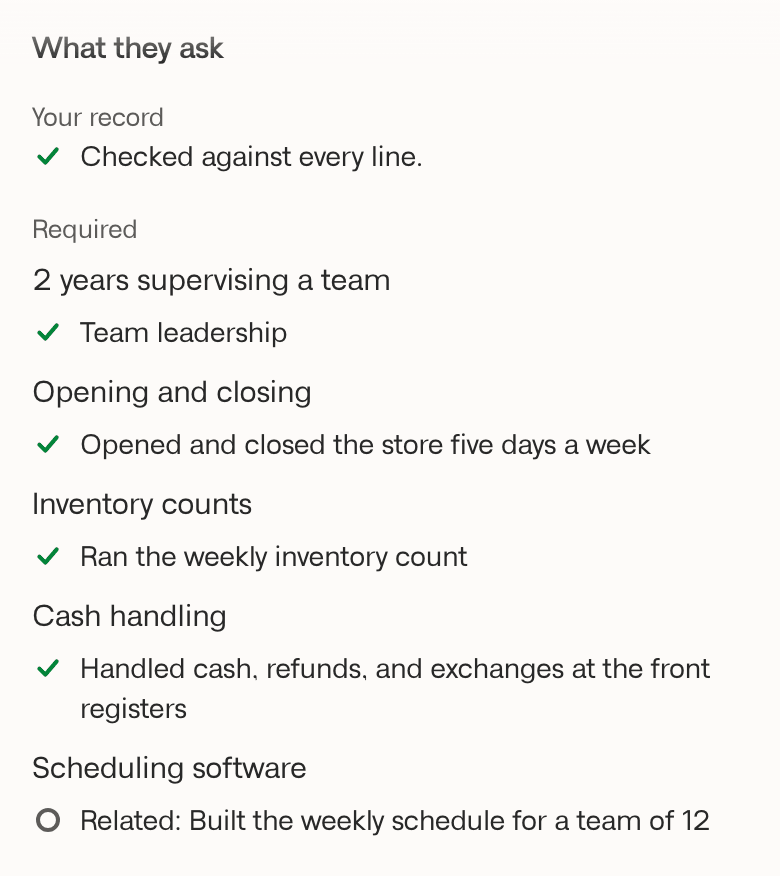
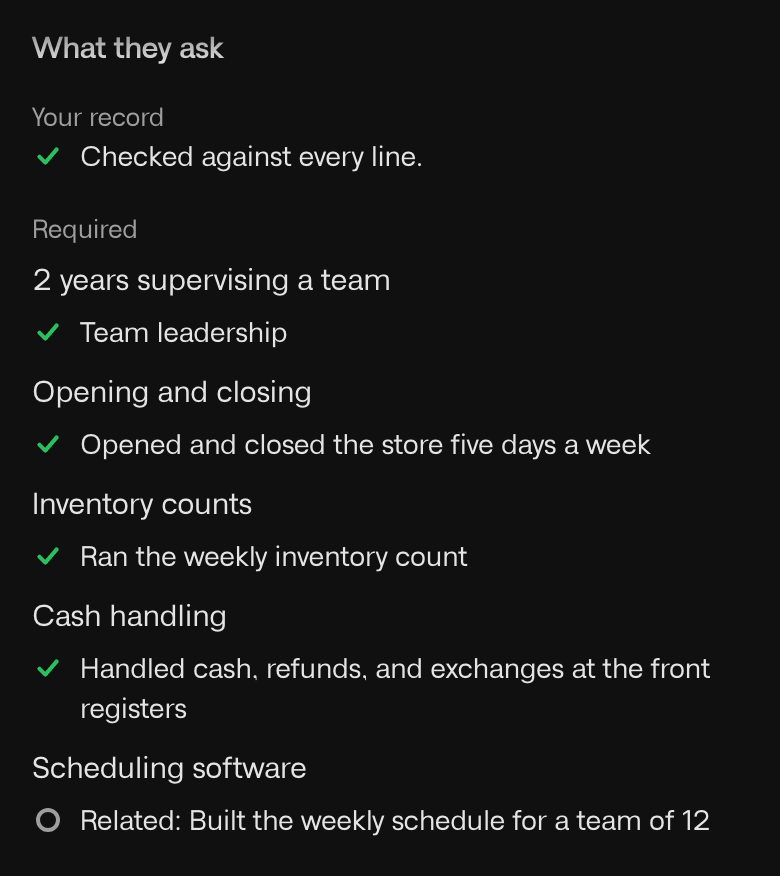
Every job you save or find gets a page that shows how you line up with what it asks for, with the pay, work setup and place beside it.
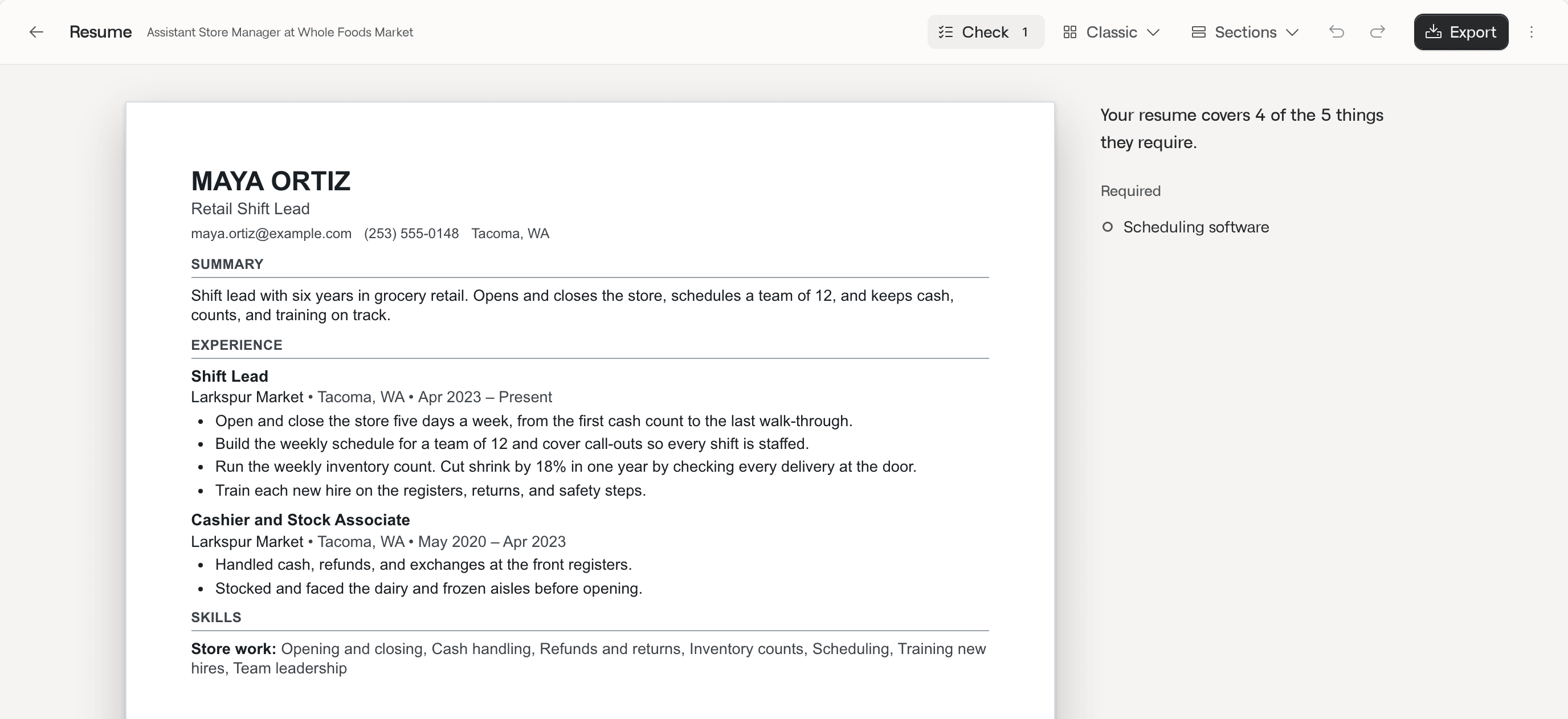
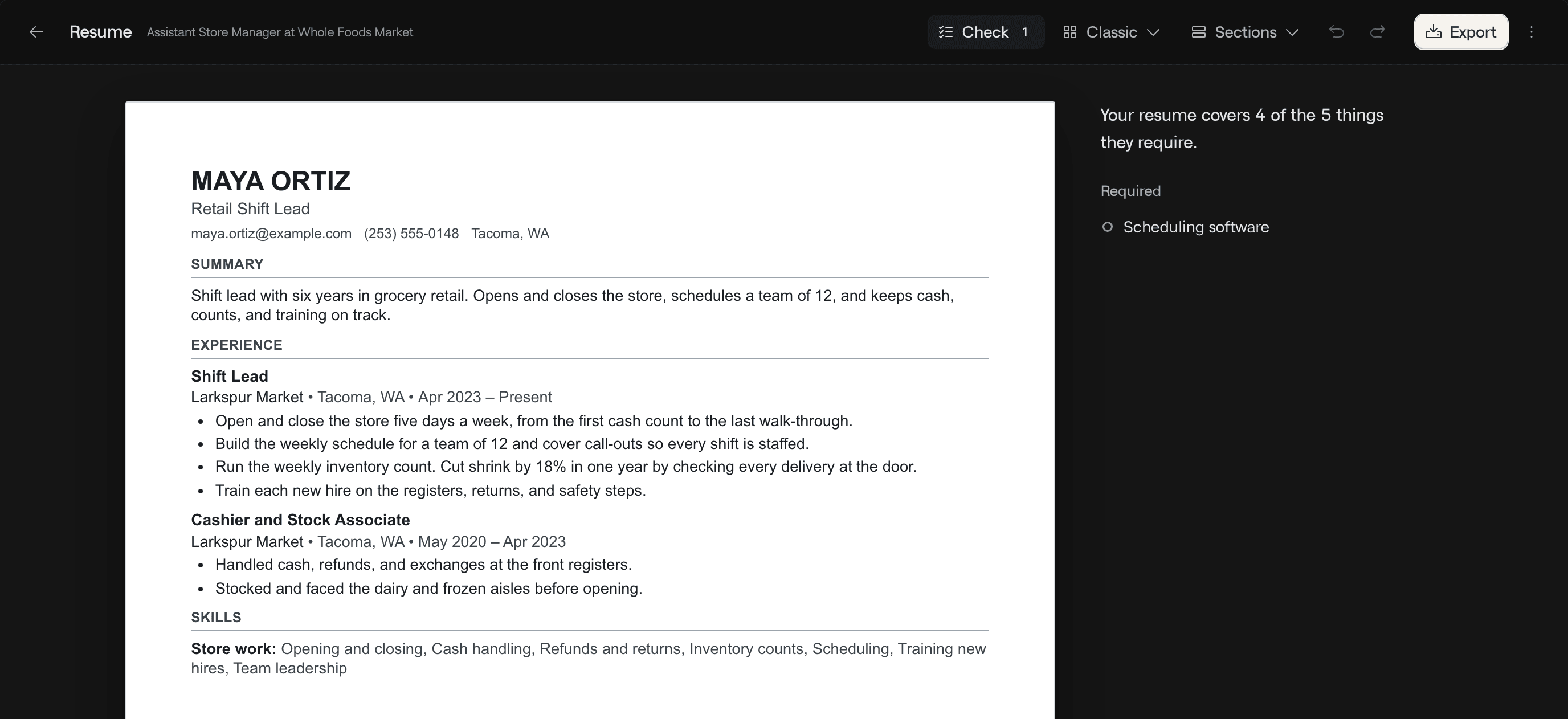
A resume in your own words
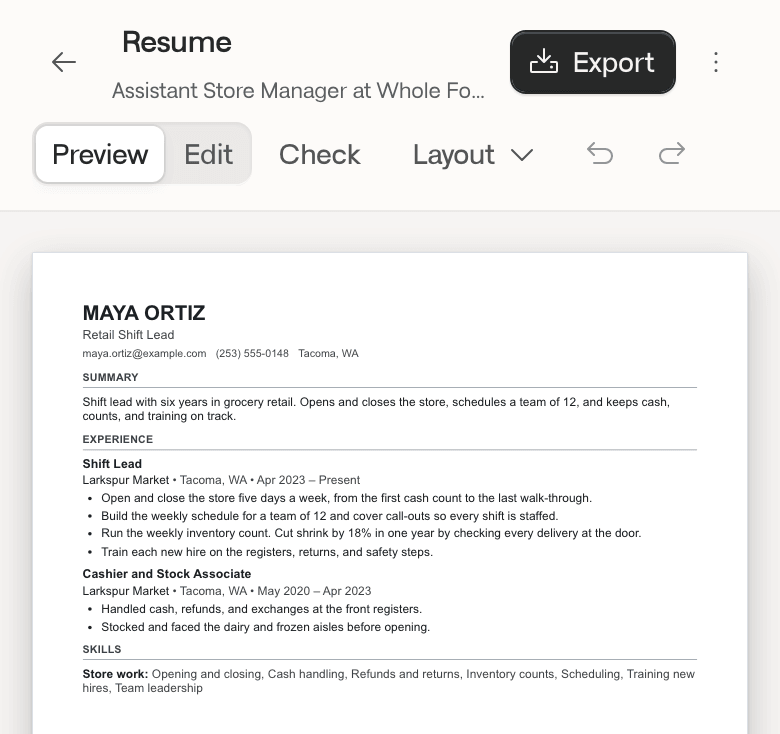
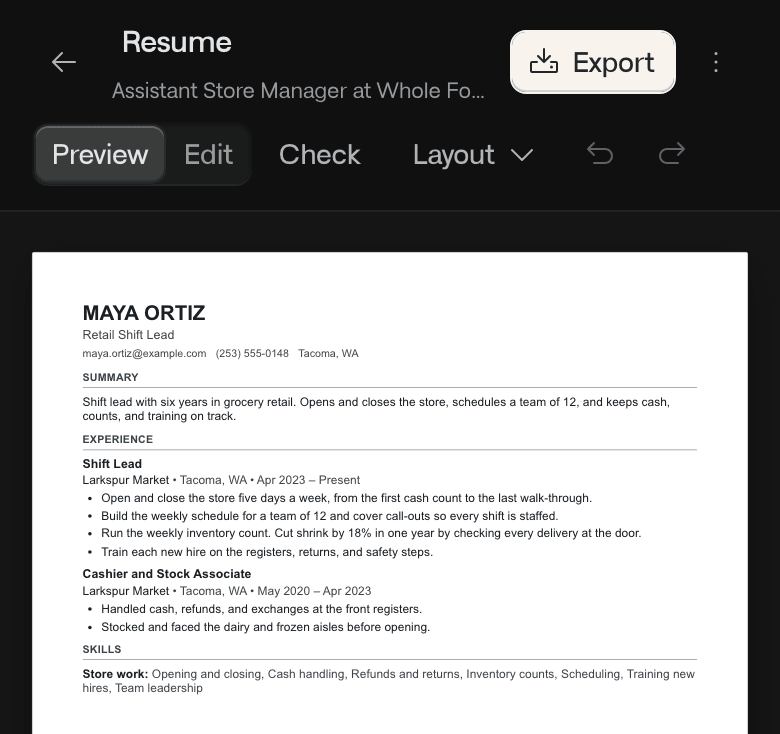
Every line traces to something you told it. Check flags any line that doesn’t, and what the job asks for that your page doesn’t say yet.
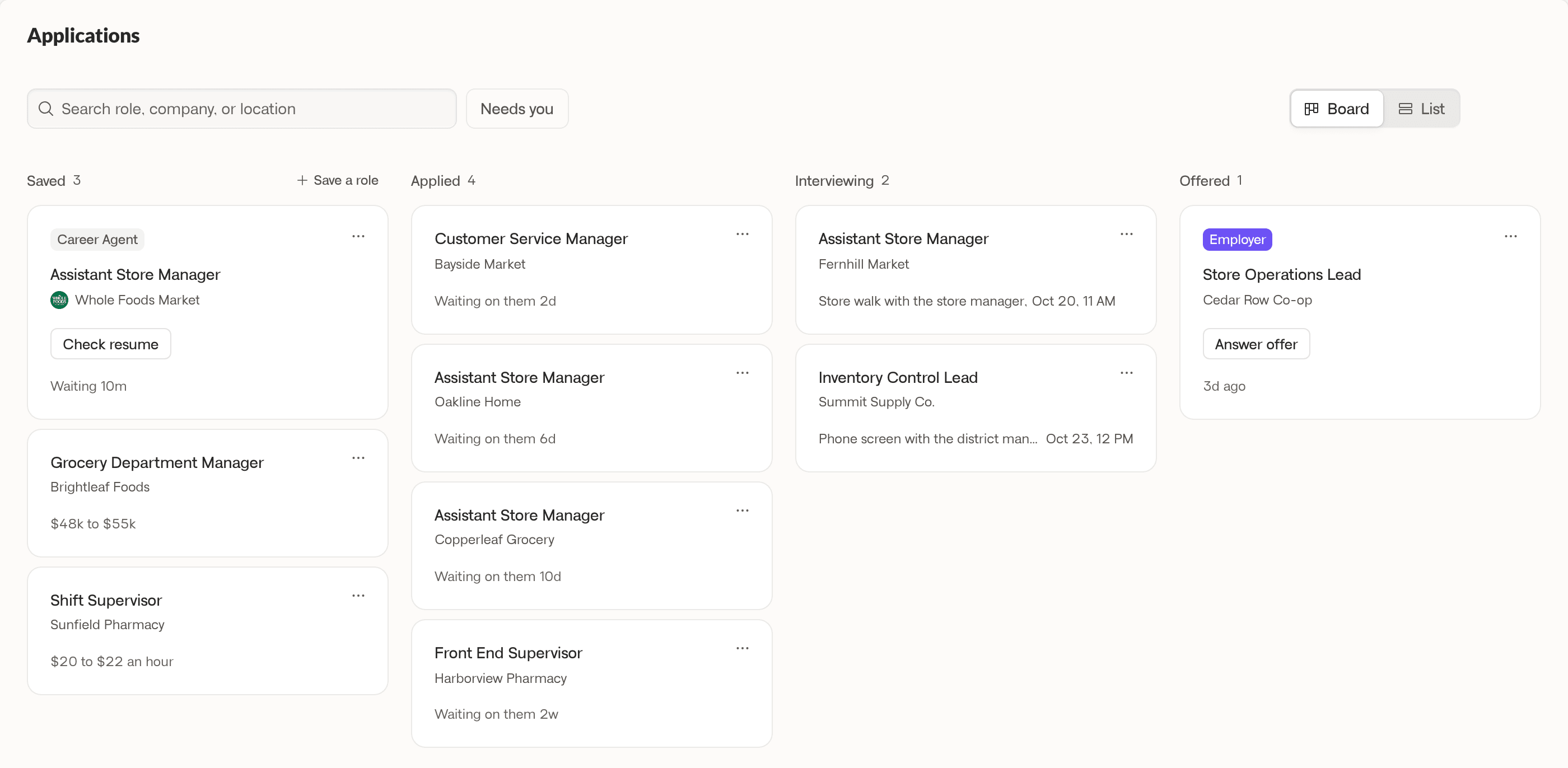
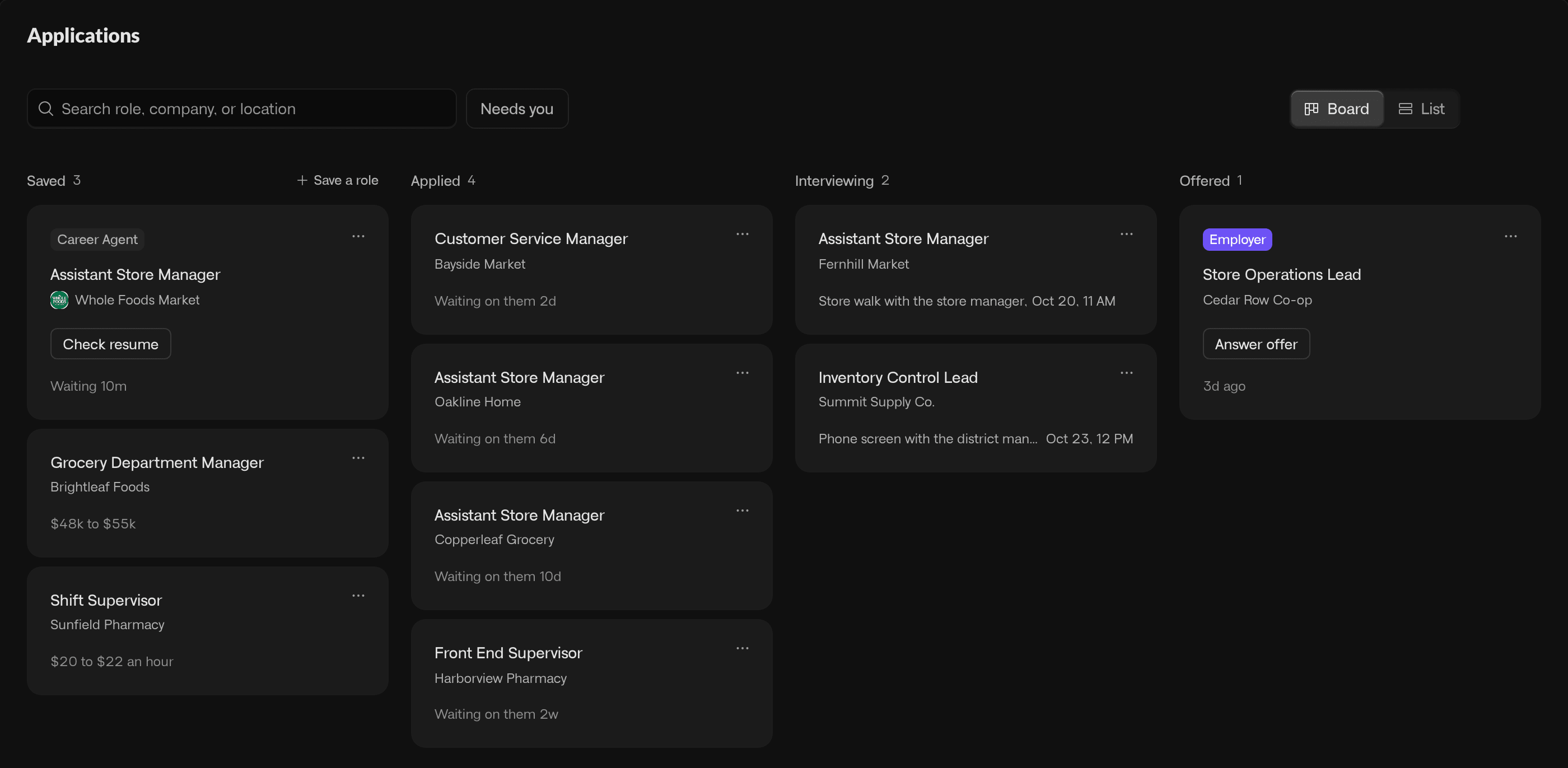
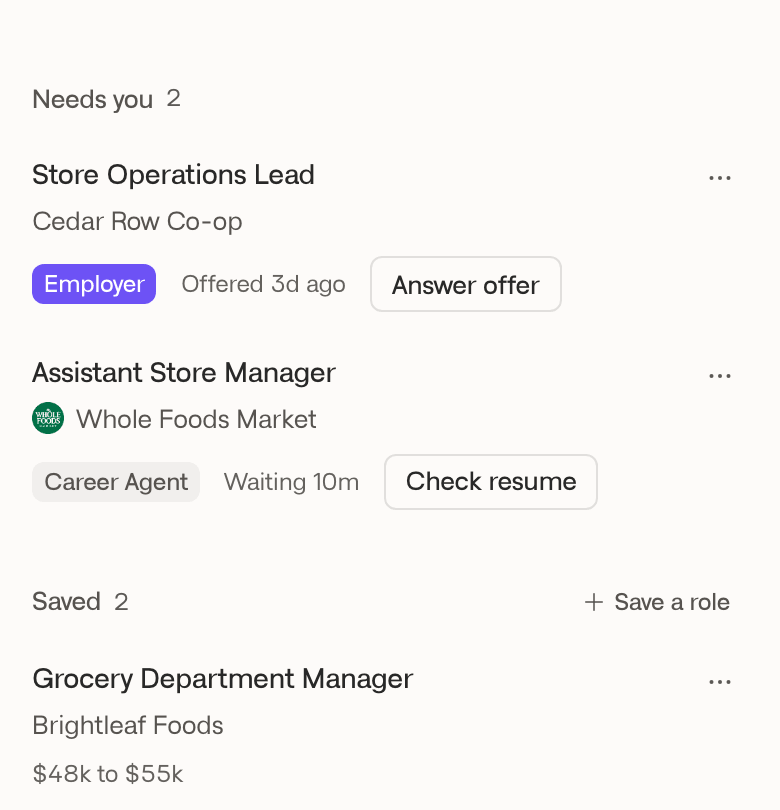
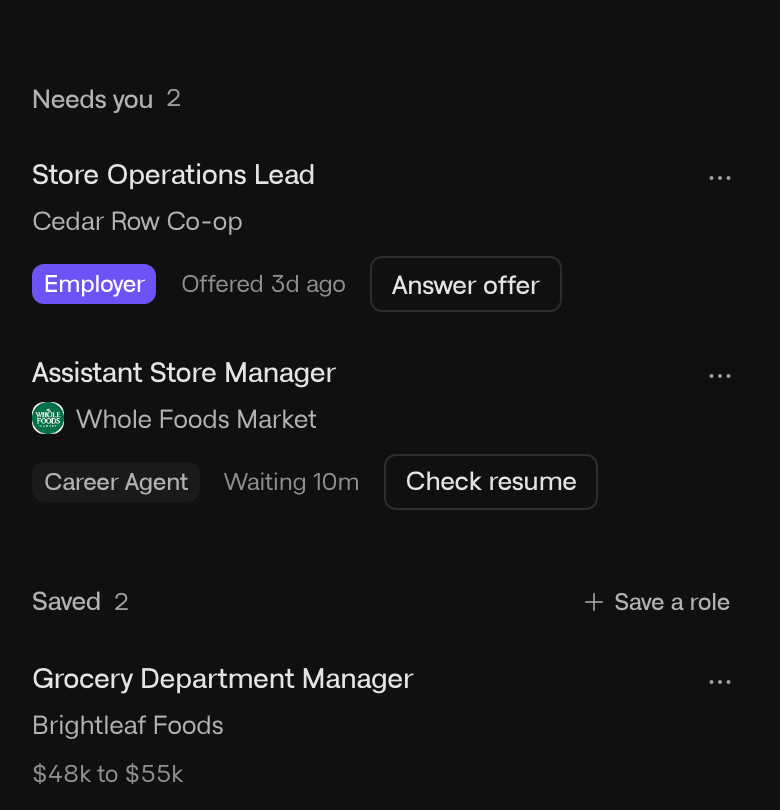
Every application in one place
Each one shows its next step, and what waits on you comes first.
You check it. You send it.
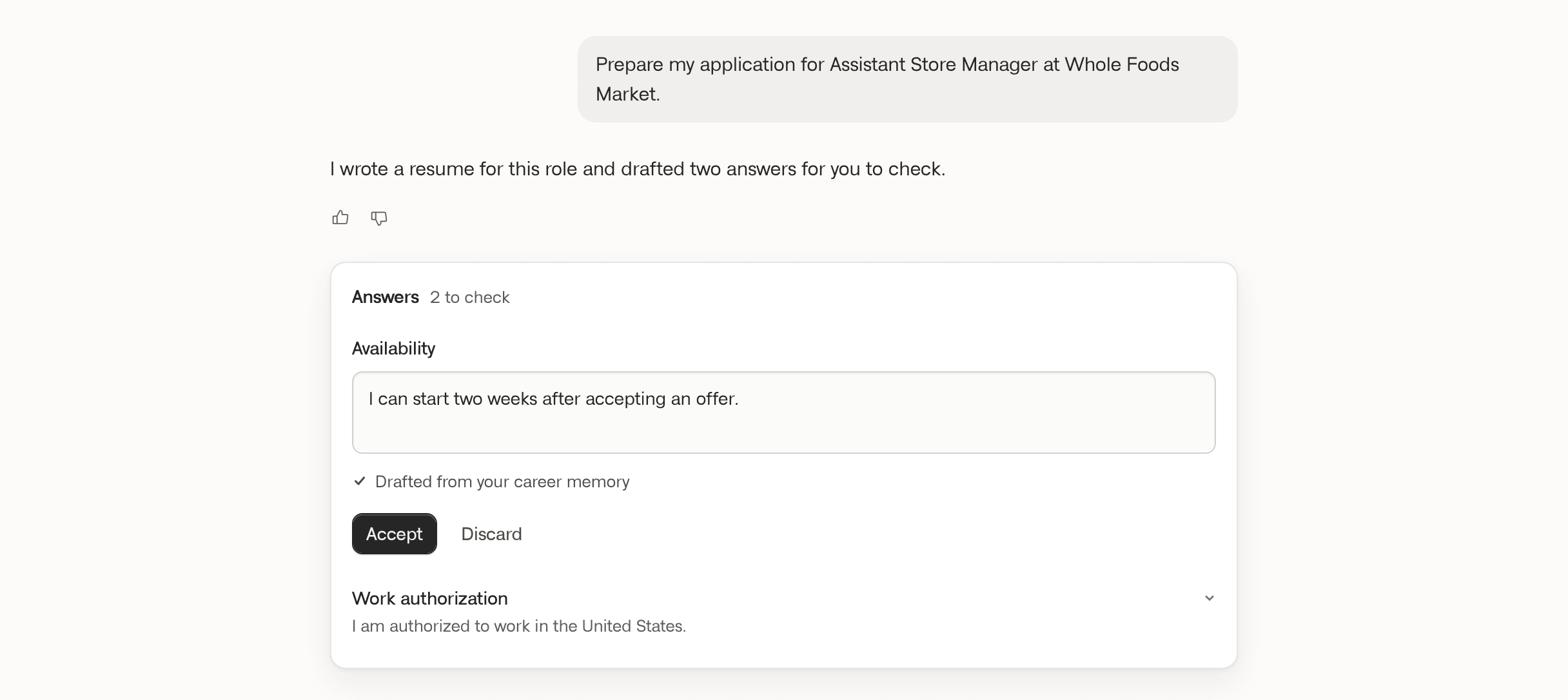
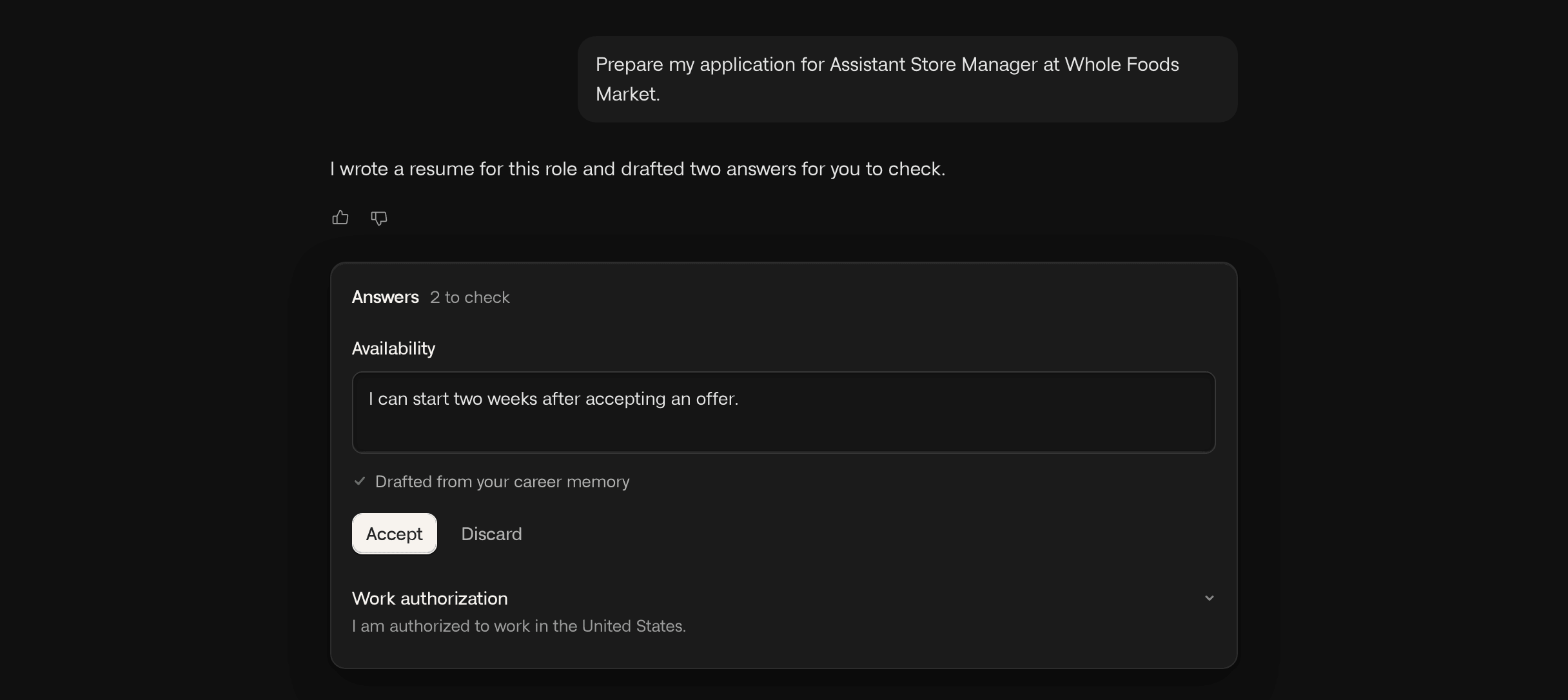
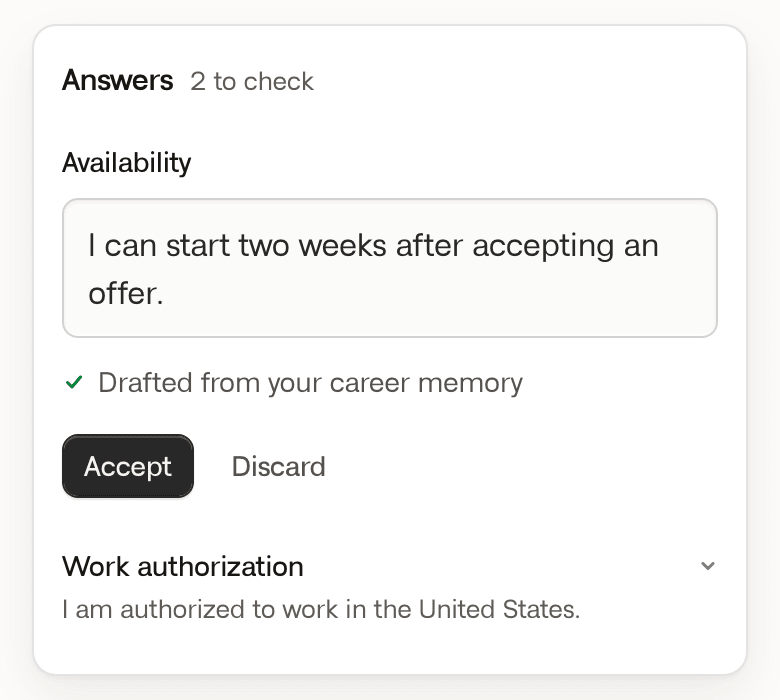
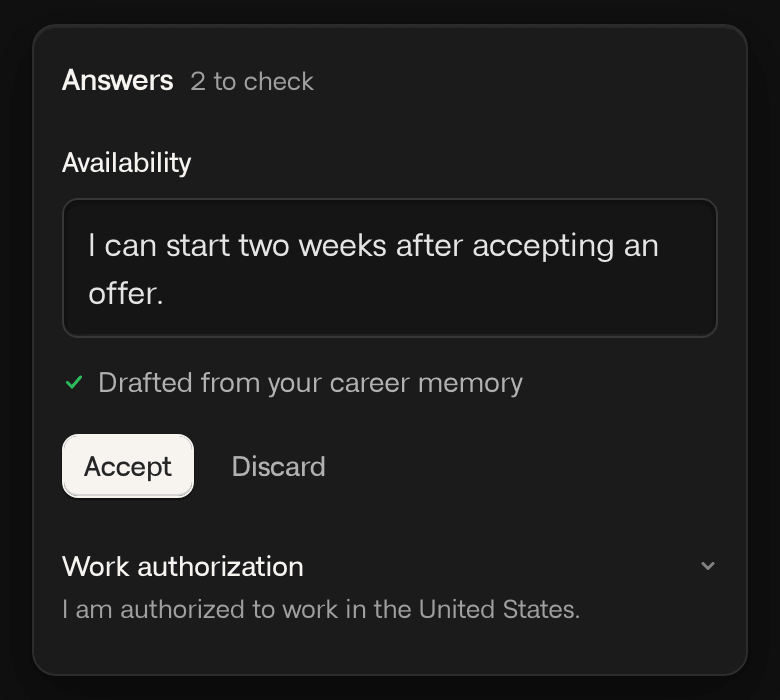
You approve every answer.
Accept, edit, or discard each draft, then apply on the employer’s site.
Nothing changes without you.
It only changes what you told it in that chat. Anything else, it asks first. Undo works for 30 days.
You decide what to share.
Questions about race, gender, disability, veteran status, or a criminal record are yours to answer or skip. It never guesses, and never signs for you.
Saved only with your OK.
An answer is kept for next time only when you say so. Forget takes it back.
Free to build. Pro to tailor.
Free
For building your resume
$0forever
- Talk, type, or upload your work history
- Your resume in PDF and Word
- See how you line up, and track applications
- Cover letters and answers
- $2 of AI a month, about 20 voice minutes
No card to start.
Pro
For applying to many jobs
$29a month
or $69 every 3 months, or $12 a week
- A tailored resume for each job
- $10 of AI a month, about 100 voice minutes
- Talk, type, or upload your work history
- Your resume in PDF and Word
- See how you line up, and track applications
- Cover letters and answers
Upgrade after setup. Cancel any time. Your saved facts stay.
AI resets each month, and voice minutes use it. New accounts get $3 more in the first 30 days. Running low? Add $10 of AI for the month in Settings.